



The Features of Inner Mongolia
Inner Mongolia Autonomous Region also known as Inner Mongolia, which is located in the north of China, spanning northeast and northwest areas and accounts for 12.3% of the China. It borders Heilongjiang, Jilin, Liaoning and Hebei in the northeast, Shaanxi and Ningxia in the
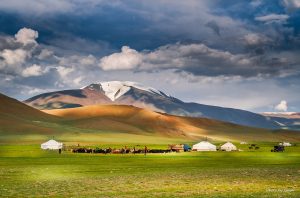
south, Gansu in the southwest, and Russia and Mongolia in the north.With a large area of primitive forest, it is one of the important forest bases of China and also known as the “Green Treasure House”. Inner Mongolia is not only attractive for its breathtaking natural landscapes such as vast grasslands, golden deserts, green forests as well as gorgeous lakes, but also famous for its rich history, legendary stories about Genghis Khan, prosperous nomadic and Mongolian culture. In here, you can deeply immerse yourself into the fascinating scenery and also can fully experience the ethnic culture and traditional festivals of the Mongols.
Top Tourist Attractions in Inner Mongolia
Inner Mongolia has rich types and a large number of tourist attractions are worthy for your exploring such as Hulunbuir Grassland, Badain Jaran Desert, Huitengxile Grassland, Xilamuren Grassland, Inner Mongolia Museum, Mausoleum of Genghis Khan, Dazhao Temple, Wudangzhao Monastery, etc. Hence, it is a dreamland for many visitors from home and abroad. Below are the top tourist attractions in Inner Mongolia.
Hulun Buir Grassland is a world-famous natural pasture, which is named after Hulun Lake and Buir Lake. With the purest blue sky and white clouds, it is also regarded as one of the four great grasslands in the world. In addition to the beautiful scenery, you can also ride a horse to experience the unique nomadic culture as well as enjoy wrestling shows and horse racing. The best time to visit Hulun Buir Grassland is from June to September every year. In July and August, when the grassland grass is lush, a grand Nadam Fair will be held.
Hulun Lake, which means “Sea Lake” and it is the fourth largest fresh water lake in China. As the important bird habitat, there are more than 200 rare birds such as swans, seagulls, and cranes, etc. There are swimming pools, Diaoyutai, promenate, etc. In summer, the climate of Hulun Lake is rather cool, which is a perfect place for escaping from the summer heat.
Huitengxile means “Cold Plateau” in Mongolian, it is one of the best preserved typical alpine meadows in the world. From every May to September, it’s scenery gets more enchanting because of the eye-catching sea flowers. Huitengxile Grassland is more than 1,800 meters above sea level and 100 kilometers long from east to west.
With fascinating and natural scenery, Xilamuren Grassland is a perfect place for families to spend a leisure holiday. Here, you can ride horses, or live in yurts, or experience the unique nomadic culture.
Badan Jaran Desert is the 3rd largest desert in China, the spectacular desert scenery is so amazing because of the colorful lakes and sand dunes; it is also known as a paradise for desert and photography lovers.
Kubuqi Desert is famous for its Whistling Dune Bay, which is a great masterpiece of nature. You can slide and surf freely from the sand mountains, feel the magical sound as well as the mysterious desert atmosphere.
Tengger Desert is the 4th largest desert in China, it has numerous sand dunes, mountains and plain. Except enjoying the incredible desert scenery, you also can experience adventurous desert hiking, camping, and camel riding.
Located in the center of Hohhot, Inner Mongolian Museum is the only comprehensive museum and it is a perfect place for having a better understanding of Inner Mongolia history and ethnic minority culture.
It is the tomb of Genghis Khan, the first great Khan of the Mongol Empire. As a symbol to commemorate Genghis Khan, it is not only symbolizes the unity of the Mongolian nation, but also marks the long-term unity of China.
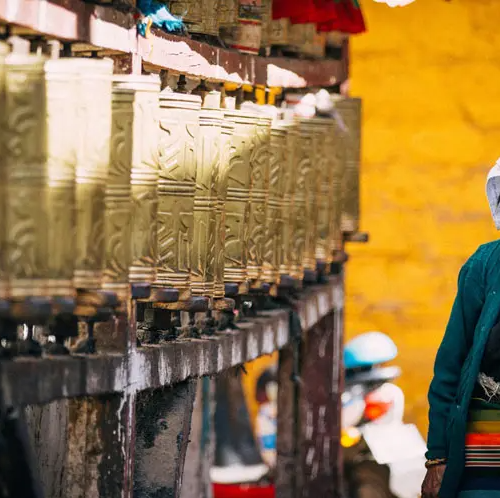
Dazhao Temple is the earliest Lamaism temple built in Hohhot, the splendid temple architecture, precious cultural relics and works of art, as well as the mysterious chamu dance and Buddhist music, constitute the unique “temple culture” of Dazhao.
As the largest temple of the Gelug sect of Tibetan Buddhism in the Inner Mongolia as well as one of the top four monasteries in China, the architecture of Wudangzhao has a strong Tibetan Buddhist style.
Ejina Populus Euphratica Forest shows the most beautiful scene of golden autumn from late September to middle October. The vast golden forest, fabulous desert landscape and wonderful desert activities are all things you can enjoy here.
Weather & Best Time to Visit Inner Mongolia
The Inner Mongolia is located in a high latitude, a large plateau area and far from the sea; the border is blocked by mountains, and the climate is mainly temperate continental monsoon climate. The precipitation is small and uneven, the wind is strong, and the cold and summer change is drastic. The northern section of the Greater Khingan Mountains belongs to the cold temperate continental monsoon climate, and the area west of Bayanhot, Haibo Bay, Bayangol belongs to the temperate continental climate. The annual average temperature in Inner Mongolia ranges from -3.7℃(Turi River) to 11.2℃ (Ejina Banner). The total precipitation in Inner Mongolia is much less than in the eastern coastal areas of China, around 200~300 mm and most rainfall is concentrated in summer. Besides, spring in Inner Mongolia is windy and dry, sandstorms and other extreme weather might occur. And in winter, the weather is very cold and it lasts for a long time. In order to have a nice Inner Mongolia trip, please check the real-time weather forecast before your travel.
The best time to visit grasslands in Inner Mongolia is summer from June to August. Autumn is the best time to have fun in deserts like Kubuqi Desert and Badain Jaran Desret, etc. In addition, you also can enjoy the oil-paint-like forest in Ejina Populus Euphratica Forest, etc. And the winter scenery of Hulunbuir, Ergun and Xing’an League is extremely beautiful, which is absolutely worthy for your visiting. In spring, the climate is dry and windy, but you can still pay a visit to some historical sites and explore the unique local culture, such as exploring Mengyuan Culture at the Site of Xanadu, have a better understanding of the legendary stories of the great Mongolian King by visiting Genghis Khan Mausoleum, etc.
Accommodation & Transportation in Inner Mongolia
Inner Mongolia is a dreamland for many visitors because it not only has the endless grasslands, vast golden deserts, primitive forests, but also can experience the nomadic tradition of ethnic Mongols, lively Nadam Fair, etc. Covered a vast land, Inner Mongolia Autonomous Region is the province with the widest cross-longitude in China. As the capital of Inner Mongolia, Hohhot is the first stop for most of the first-time travelers. It gathers the best-starred hotels from luxury stay to cost-effective ones. Meanwhile, visitors also can find various of hotels in the downtown areas of Baotou, Hulunbuir, Ordos, Xilingol, and Chifeng, etc. In contrast to Hohhot, the accommodation conditions in most other regions of Inner Mongolia are relatively simple, but you still can find many other comfortable stays and accommodation with ethnic characteristics such as Mongolian yurts, desert camp and resort especially in the most popular tourist destinations including Hulunbuir Grassland, Xilamuren Grassland, Badain Jaran Desert, Kubuqi Desert, and Tengger Desert, etc.
To go to Inner Mongolia by air, you can choose to fly to Hohhot. Hohhot is one of the busiest transportation hubs in Inner Mongolia and is home to Hohhot Baita International Airport. It is the largest airport in Inner Mongolia, located in the Baita International Airport Economic Zone on the outskirts of Hohhot city, about 40 kilometers from the city center. Baita International Airport is connected to major cities in China, providing direct flights to Beijing, Shanghai, Guangzhou, Chengdu, Chongqing and other places. No matter which city in the country you are starting from, it is easy to find direct flights to Hohhot. Taxis, buses and bus services are available at the airport, allowing you to easily reach the city and other destinations.
In addition to Baita International Airport, there are a number of other airports in Inner Mongolia, such as Baotou Er li ban Airport, Ordos Yijin Horo Airport, etc., which also provide domestic flights. If your destination is not Hohhot city, you can choose the appropriate airport according to your specific itinerary. There are also some airports in cities near Hohhot, such as Baotou, Ordos, etc. If your destination is in these cities, you can also consider choosing to fly to the corresponding airport. In short, if you want to go to Inner Mongolia by plane, the first choice can consider flying to Hohhot Baita International Airport. Choose the right flight and airport based on your departure point and specific itinerary to ensure you can safely and easily reach your destination and enjoy the beauty and culture of Inner Mongolia.
The railway transportation in Hohhot and Baotou is very convenient, which both are well-connected with surrounding provinces and cities by high-speed or bullet trains. Hence, it is very convenient to visit Inner Mongolia from the places such as Beijing, Shanxi, Hebei, etc. Besides, you can also take a high speed train to make efficient transfer between central cities in Inner Mongolia like Hohhot, Baotou, Ulanqab, and Ordos.
What’s more, there are also normal trains connecting Inner Mongolia with Beijing, Shanghai, Xian, Harbin, Dalian, Hangzhou, Chengdu, Kunming, Guiyang, and Lanzhou, etc. In contrast with the central regions, the railway traffic in the northeastern and western Inner Mongolia is quite backward, you can only take normal normal trains to visit these places.
The Unique Culture of Inner Mongolia
Inner Mongolia is one of the five major ethnic autonomous regions in China and one of the largest provincial-level administrative regions in China, where Han, Mongolian, Hui, Manchu and other ethnic groups live together, with diverse cultures and unique customs. Inner Mongolia not only has grassland, blue sky, white clouds, red sun and other natural scenery, but also has extensive and profound history and culture and colorful folk customs. Here is some introduction to the customs and characteristics of Inner Mongolia.
Inner Mongolia is an amazing place, with unique national customs and cultural characteristics, the culture and customs of Inner Mongolia are worthy of in-depth understanding and exploration. From Inner Mongolia’s food, clothing, housing, art, handicrafts, horse riding culture, grassland music, festivals and other aspects, Inner Mongolia’s culture and customs have rich and colorful content and profound historical heritage.
The traditional costumes of Inner Mongolia are full of grassland customs and are the iconic costumes of the Mongolian and Ewenki ethnic groups in Inner Mongolia. The traditional clothing for men is a long robe and pleated trousers, with a blue or black robe on top and white pleated trousers on the bottom, with a delicate belt around the waist, and a black felt hat on the head. Women’s traditional clothing consists of long robes and long skirts, with colorful robes on the top and embroidered dresses on the bottom, and golden hair accessories and colorful garlands on the head.
Inner Mongolia’s food culture is also unique. The main food in Inner Mongolia is beef and mutton, dairy products and pasta, such as steamed buns, pies, fried bread and so on. The roast meat in Inner Mongolia is also very famous, and the roast mutton kebabs, roast beef kebabs and roast whole sheep are very special dishes. In addition, Inner Mongolia also has a unique culture of milk tea, milk tea is one of the favorite drinks of Inner Mongolia people, the way of making milk tea is different from other regions, adding salt, cream and tea leaves, and the taste is unique.
One of the main characteristics of Inner Mongolia is the herdsmen culture. Many Inner Mongolians make a living by raising cattle and sheep. They herd animals on the grasslands, play madrigals, jump horses, and shoot arrows on horseback. There are also many traditional folk arts and handicrafts in Inner Mongolia, such as embroidery, carving, pottery, felt products, etc. These arts and handicrafts have a strong ethnic style and cultural connotation.
Mongolian yurt is a kind of traditional housing in Inner Mongolia, and it is also a landmark building in Inner Mongolia. The yurt is a dome-shaped structure made of wooden frames and felt, with living facilities such as a stove and a kang bed inside, which is well suited to Inner Mongolia’s climatic conditions. Yurts are not only practical, but also a cultural symbol of the Inner Mongolian people, symbolizing the Inner Mongolian people’s simple, brave and open-minded spirit.
Inner Mongolia horse riding culture is also an important part of Inner Mongolia culture. In Inner Mongolia, horse riding is a very popular sport and recreational activity, and horse riding competitions are a favorite activity of Inner Mongolians. The Inner Mongolian people have excellent riding skills, and they can perform various actions and performances on the horse, such as archery, catching sheep, beating whips, etc., showing the bravery and agility of the Inner Mongolian people.
Inner Mongolian grassland music is also an important part of Inner Mongolian culture. Grassland music has a strong national style, mainly with the horse head qin, erhu and flute as the main instruments. The Matouqin is the representative of traditional music in Inner Mongolia. It is the oldest and most representative of the ethnic instruments in Inner Mongolia and is known as the “King of the grassland”.
There are many important festivals in Inner Mongolia, the most important of which is the Nadam Fair. The Nadam Fair is a grand traditional event on the grasslands of Inner Mongolia. It is held from July to September every year, and herdsmen from all over the country gather together to celebrate. The Nadam Fair includes equestrian competitions, wrestling competitions, singing and dancing competitions and other activities, and is also an important occasion for cultural exchanges in Inner Mongolia.
If you have the opportunity to travel to Inner Mongolia, don’t miss the chance to experience Inner Mongolia’s horse riding culture, taste the local cuisine and live in a yurt. At the same time, you can also participate in some traditional festivals in Inner Mongolia to feel the unique charm of Inner Mongolia culture. If you don’t have the opportunity to experience it yourself, you can learn more about this beautiful land and its people by learning about Inner Mongolian culture and customs.
In short, Inner Mongolia’s culture and customs are rich and colorful, which contains profound historical and cultural deposits. Understanding Inner Mongolia culture and customs can not only help us better understand the land and its people, but also enrich our cultural knowledge and vision, allowing us to have a broader and richer cultural experience.