




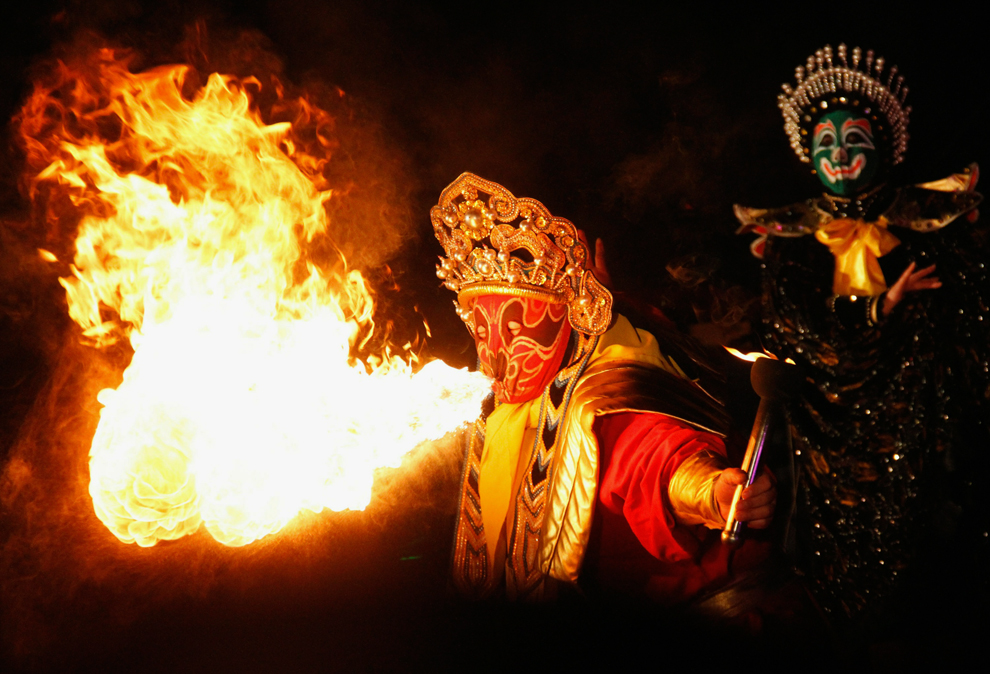
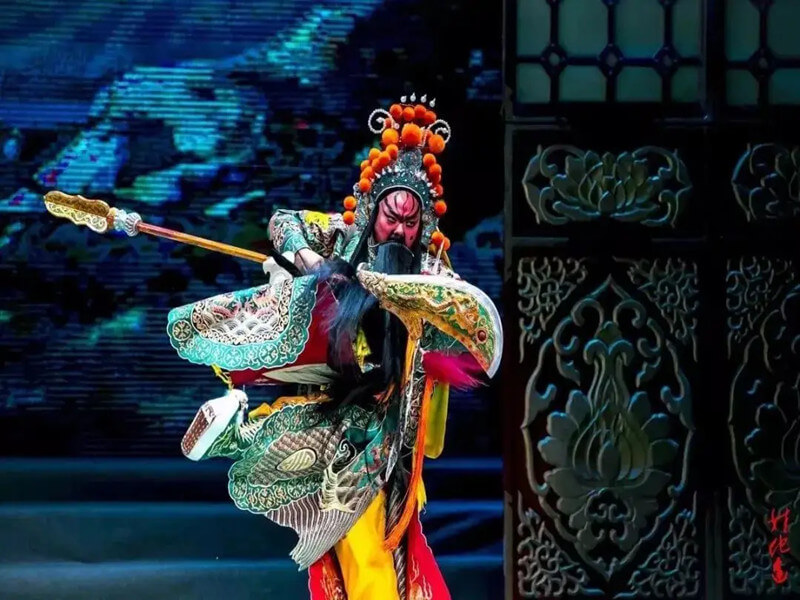
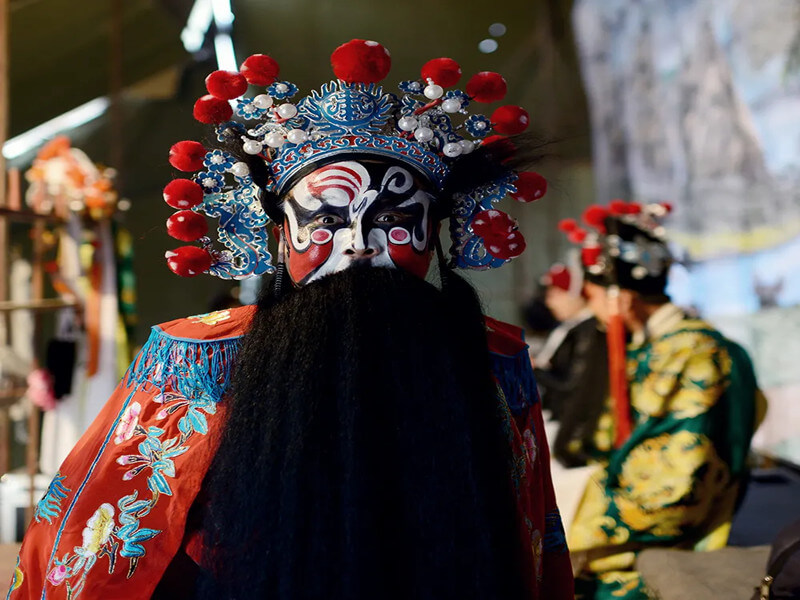
Sichuan Opera is a characteristic of Sichuan culture. Chengdu is a city of drama. It has adapted five major melodic forms that include the Kunqiang Tune, the Huqin Voice, the Tanxi, Gaoqiang, and the Dengdiao Tune. Except for Dengdiao, these five kinds were introduced by the opera troupes from other provinces during the period from the late Ming Dynasty to the middle Qing Dynasty. Its music is inclusive and draws on the strength of various opera tune systems in China to combine the local language, tune, and music with diversified forms, abundant tunes, precise structure, and different styles.
Sichuan Opera is rich in plays and there is a saying that ” 3000 plays of Tang Dynasty, 800 plays of Song Dynasty, and numerous plays of the Three Kingdoms”. Sichuan Opera’s language is vivid, lively, humorous, and full of the flavor of life, so it is in the favor of the mass. It has many amazing stunts including “face changing”, “flame spitting-out”, “lift” and “open the third eye on foreheads to show magic power”.
Theater recommended
Sichuan Opera Art Center Add: Huaxing Street
Shufengyayun Add: Wenhua Park
Yuelai Teahouse Add: Huaxing Street, Beside Jinjiang Theatre
Shunxing Ancient Teahouse Add: Chengdu International Exhibition & Convention Center
Sichuan Teahouse The tea culture of Chengdu is different from that part of North China and that of the grasslands area. People in Chengdu like to meet each other or have a rest by way of drinking tea together at a tea house. ” Gaiwan Tea” was firstly invented in Chengdu.
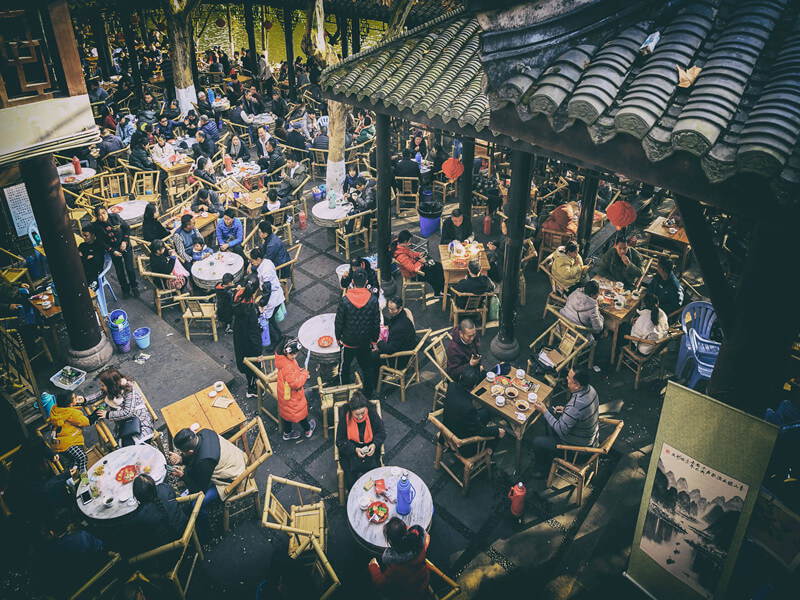
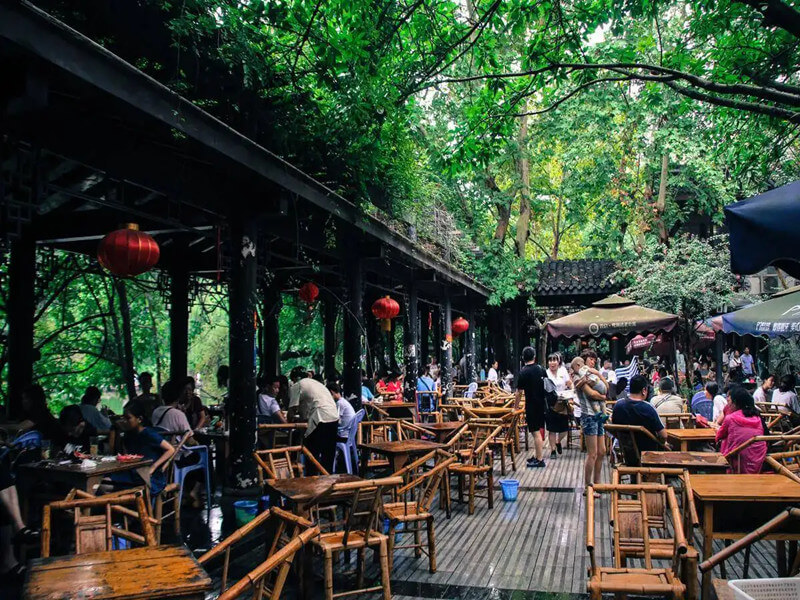
Tea sets of “Gaiwan Tea” include a tea cover, teacup, and saucer. Seats in a tea house usually are bamboo chairs with backs, steady and comfortable to our backs. Moreover, a bamboo chair is so light as to be moved about. If some people often drink tea together, we call them tea friends. When a new one comes, the old ones will firstly say “hello” to him and invite him to drink tea with them. Then, they will move to another table and ask the “tea doctor” to make new tea. Tea doctors are attendants serving in tea houses.
They are good at making tea. Holding bronze pots with long mouths in hand, they can pour tea water from about one meter into cups without a drop spilling out skillfully tea doctors have superb skill in handling teacups, quickly and accurately. So, they serve many customers at a time.
Folk art shows such as storytelling, urheen or dulcimer playing, Sichuan opera performances and so on are often held at a tea house. Some people even play chess or “Mah-Jong” there. There is a rich local aura at the tea house.