




The Pamirs, the eastern part of which is located in the extreme southwest Xinjiang, is where the Tianshan mountain ranges and Kunlun mountain ranges converge and the general altitude is between 3200-4500 meters.
The Pamirs consist of magnificent rolling mountains and hills and it is called the father of all the mountains. In ancient Chinese literature, there are some records of the Pamirs. In the “Life of Emperor Mu”, it is said that the Pamirs were called Chong Mountain meaning, “the only highest mountains on the Earth”.
In “the Western Regions of Hanshu”, a book written by Ban Gu, the Pamirs were called Conkling. In the book written by Xuanzang, the famous monk of the Tang times who went on a pilgrimage for Buddhist scriptures to ancient India, the Pamirs were named “Bomilo”. And in the Book “Xintangshu”(“New History of Tang Dynasty”), the Pamirs were named “Bomi”.
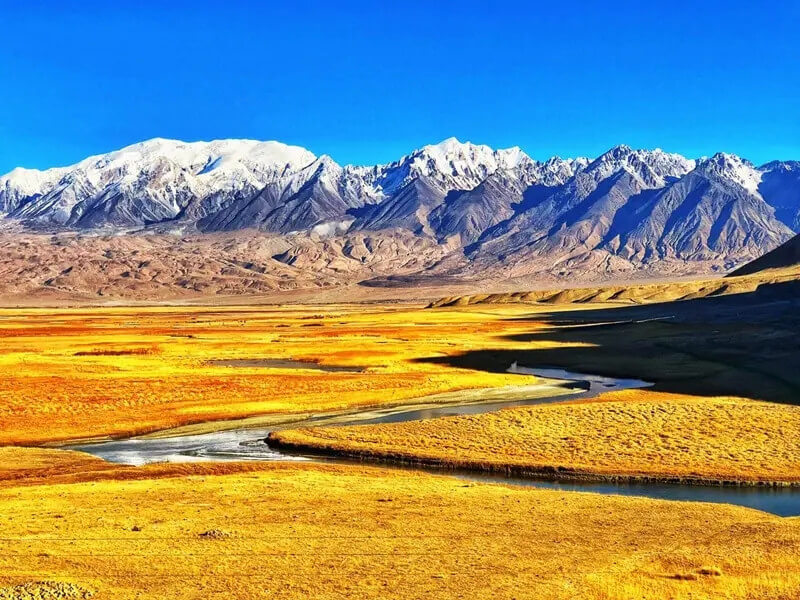
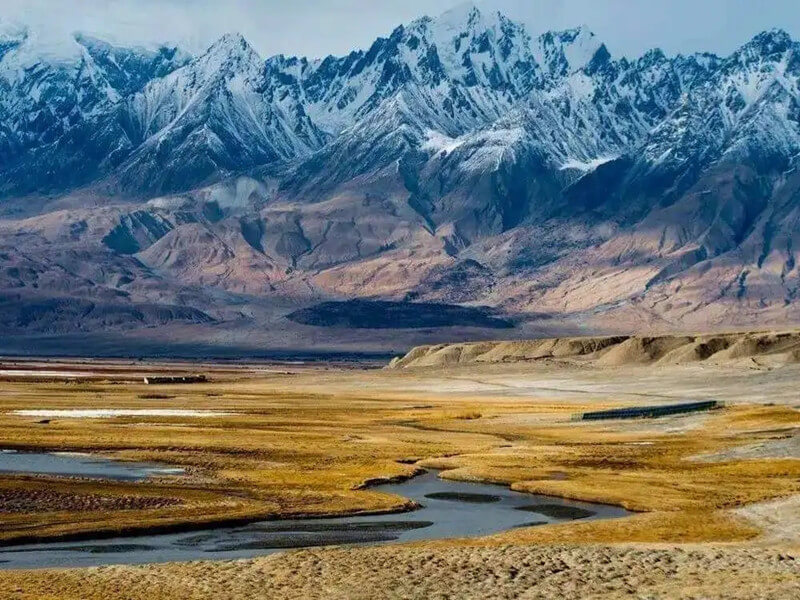
In history, the Pamirs were an important strategic juncture on the ancient Silk Road, and the dynasties of China in different times established their administrative and military posts on the Pamirs. And the Pamirs were vividly described in their great books by Faxian, a monk and Buddhism tourist of the Jin Dynasty, Xuanzang, and Mark-Paul, who traveled through the Pamirs.
In the eastern Mountain area of the Pamirs, there exists a huge area of glaciers, 2200 square kilometers in all and 635 square kilometers only in the Gongger-Muztagh peaks, where the glaciers are as thick as 100 meters, and when one looks at them, one would find the whole peaks are capped by the ice. Some of the glaciers here, such as Kekehili Glacier on the eastern slope, Jiangbulak Glacier on the northwestern slope of Muztagh Peak, and the Karaya-kara Glacier on the northern slope of Gongger Peak, are 20 kilometers long, and the landscape here is magnificent and astonishing.
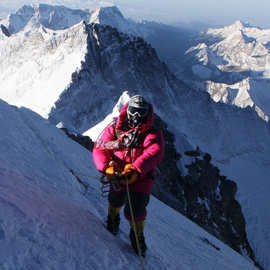
There are 3 peaks on the Pamirs that are open to mountaineers: the Gongger Peak(7719 meters above sea level), the Gongger Jiubie Peak(7595 meters), and Muztagh-Ata(7509 meters, and it is called “the Father of Ice Mountains). Every year, they attract thousands of mountains and tourists from all over the world.